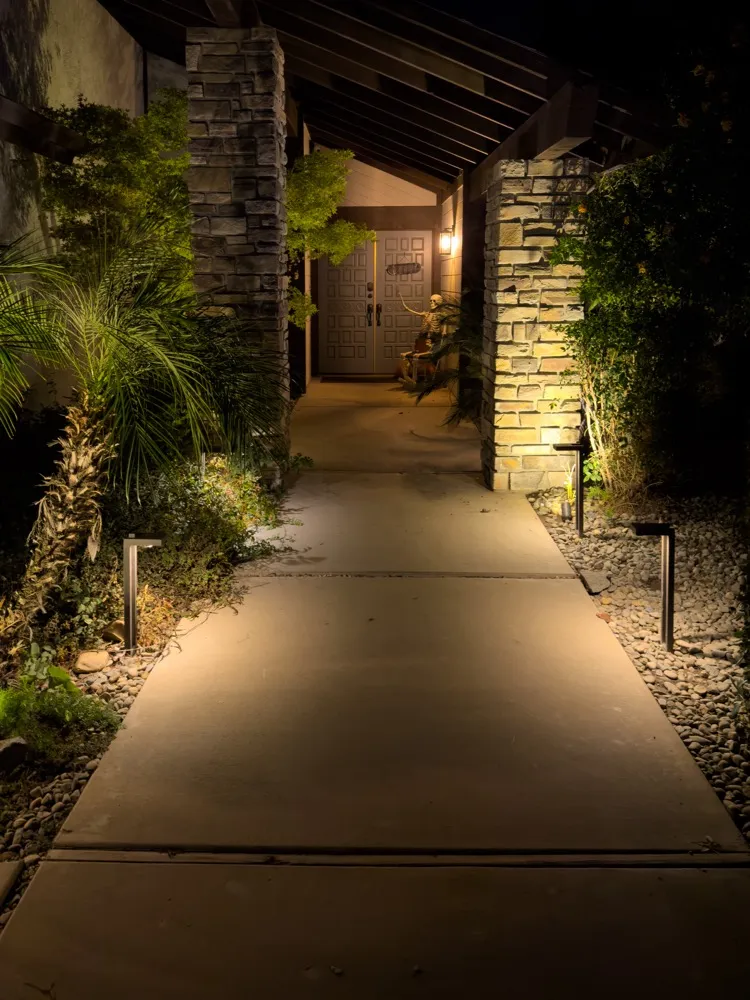
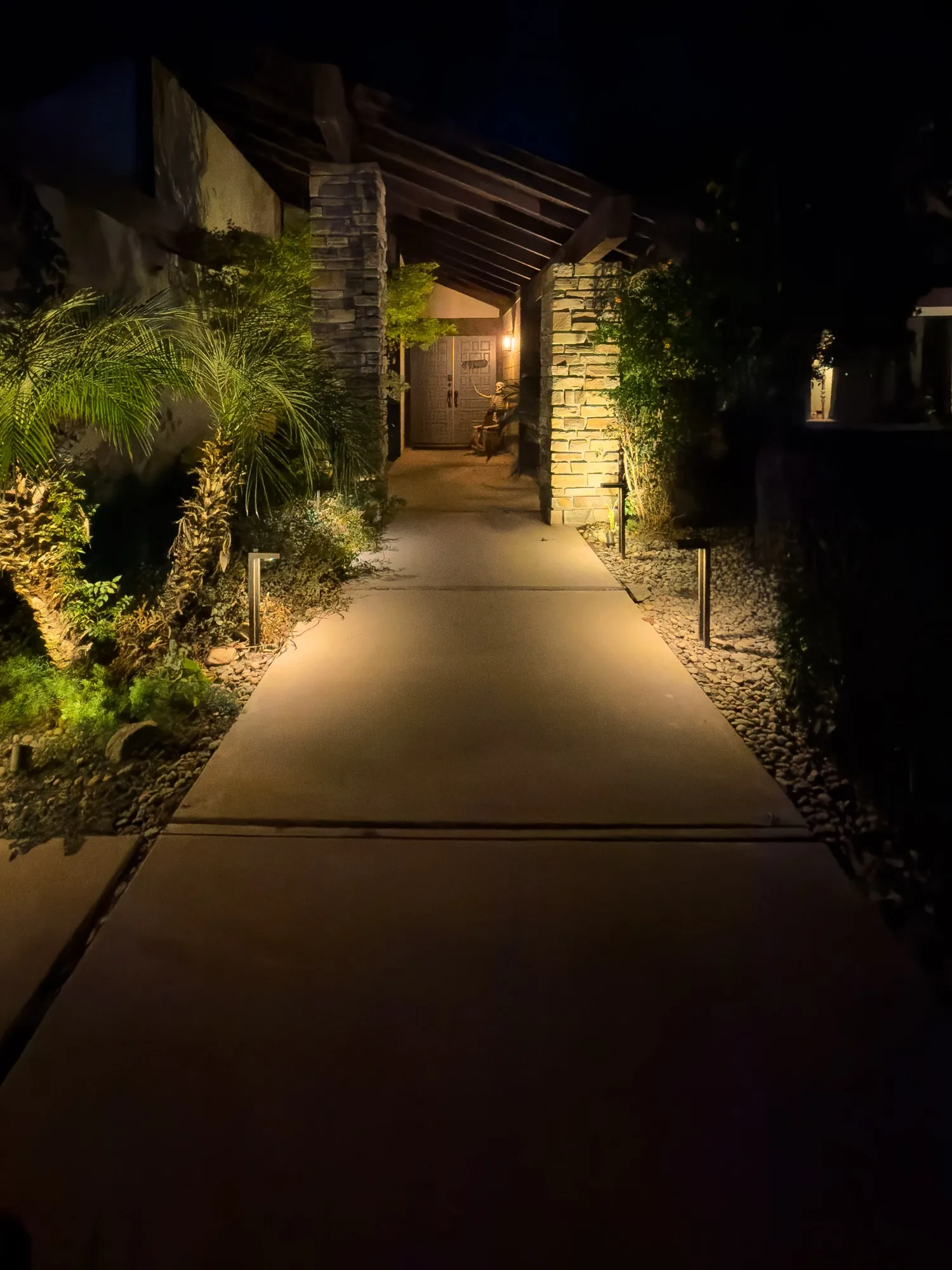
Walk the route at night
We follow the path in the dark to find what is actually hard to see.
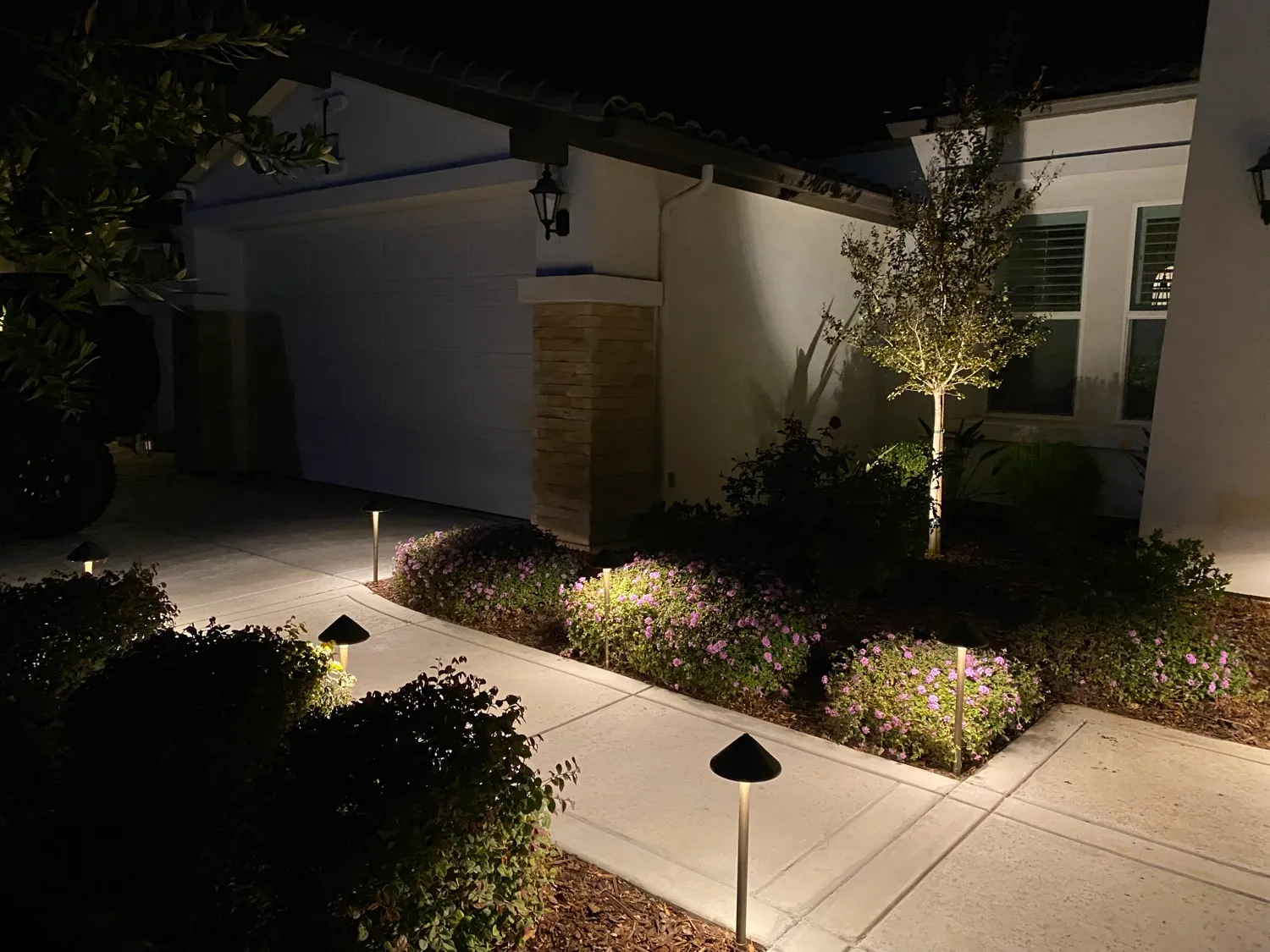
Path & Walkway Lighting
Shielded path, step, and entry lighting that shows the way without turning the walkway into a runway.
The short version
Evenly spaced path lights are the most common mistake in landscape lighting. They read as hardware first and landscape second, and they usually leave the actual hazards — the step, the grade change, the turn in the walk — unlit.
We place fixtures where the path needs explaining: at turns, at edges, at level changes, and where planting crowds the walkway. Between those points, the light from the surrounding beds and trees is usually enough.
We install across Bakersfield and Kern County on concrete, pavers, decomposed granite, planted borders, and long entry approaches.
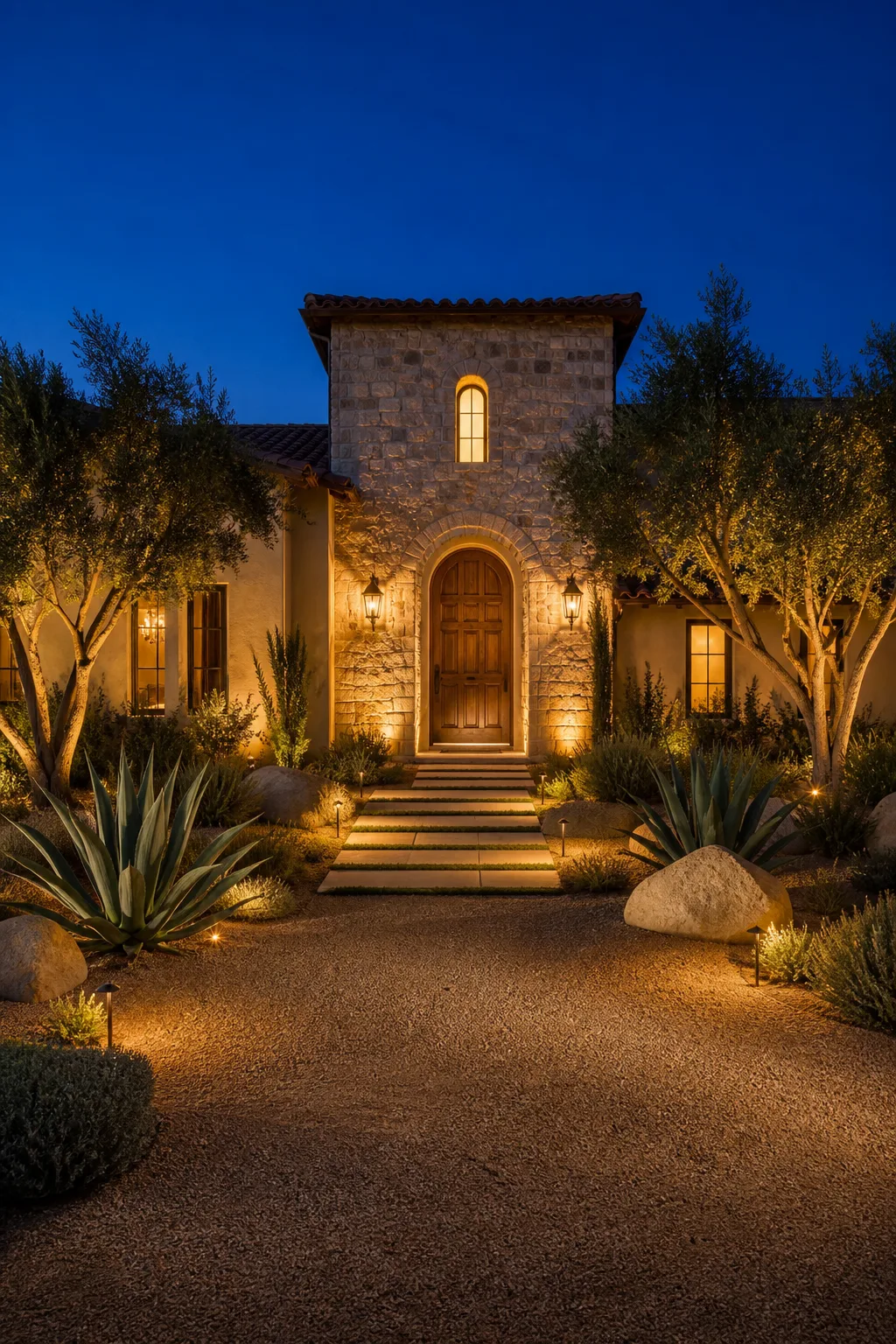
Fixture choice
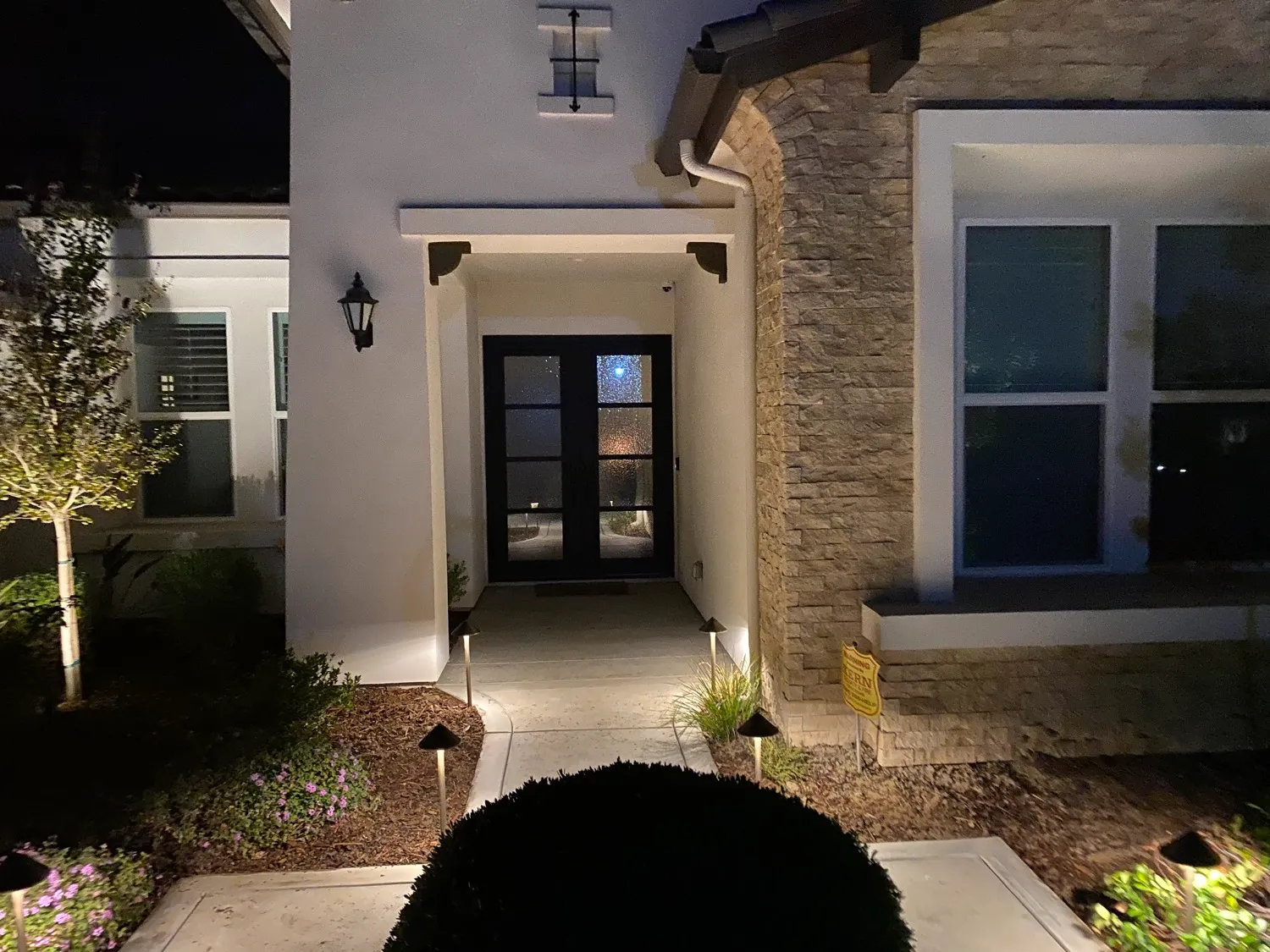
We use shielded, downward-facing fixtures so you see a pool of light on the ground instead of a bright point at eye level. Height and hat diameter get matched to the planting so the fixture disappears in daylight too.
Where it goes
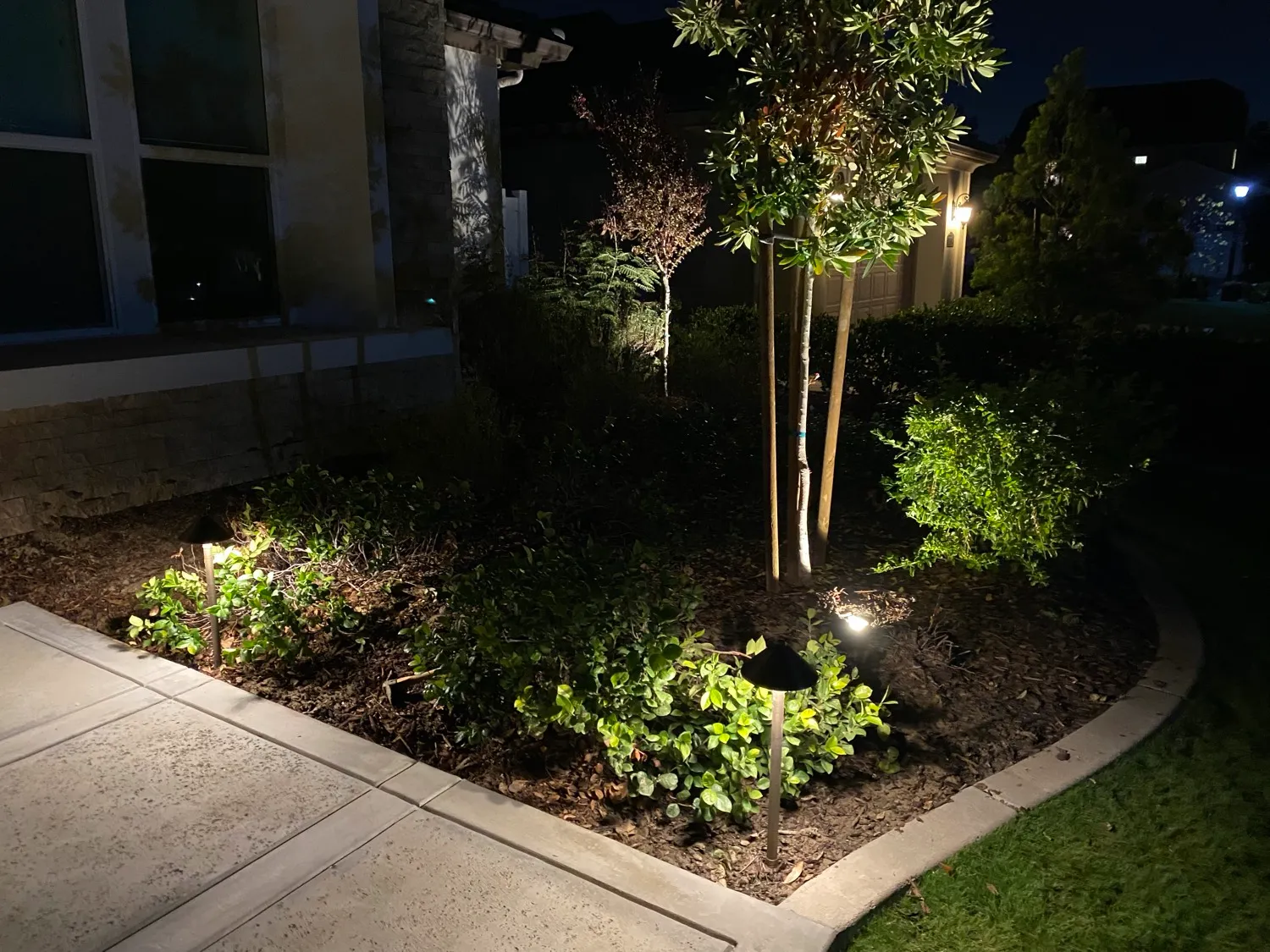
Steps and grade changes
Steps, retaining walls, and pool decks are where a missed edge actually matters. Light placed low and from the side casts a shadow across the tread, which is what makes the edge readable. Light from directly above flattens it and hides the drop.
Where hardscape allows, we recess fixtures into risers and walls so nothing sits in the walking path.
How it installs
We follow the path in the dark to find what is actually hard to see.
Fixtures get staked and reviewed with you before anything is wired.
Runs are trenched below the surface and routed clear of irrigation lines.
Every fixture is set plumb, aimed, and checked again after the first dark night.
You should notice the walkway, the planting, and the front door. Not the fixtures.