Property Walk
We meet at the home, review the areas that matter, and talk through goals and budget range.
See the Property Walk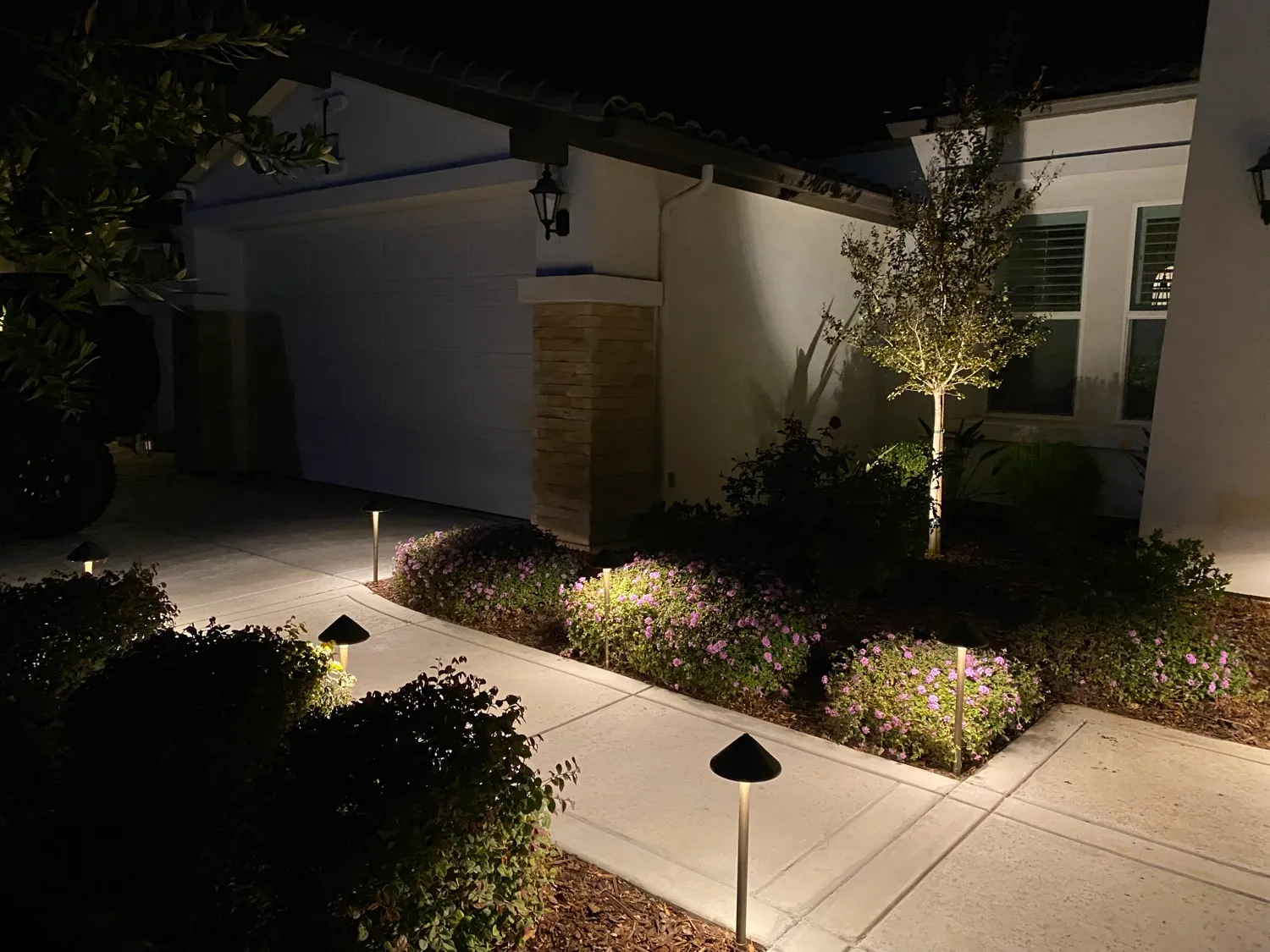
Our process
From the first walk of the property to the night we come back and aim it.
Overview
A landscape lighting system is only as good as the decisions made standing in the yard: what gets lit, what stays dark, where the wire can run, and how the property should read from the street.
This page walks through each stage so there are no surprises about timing, access, or what you are approving.
At a glance
Small systems can finish in a day. Larger properties are usually staged across two or three.
We meet at the home, review the areas that matter, and talk through goals and budget range.
See the Property WalkFixture counts, zones, transformer sizing, and a written scope you can review line by line.
Pricing GuideTrenching, wire runs, transformer mounting, and fixture setting — usually one to three days.
See Installation StagesWe return after dark to aim, shield, and balance every fixture before the job closes.
See the Night Aiming Stage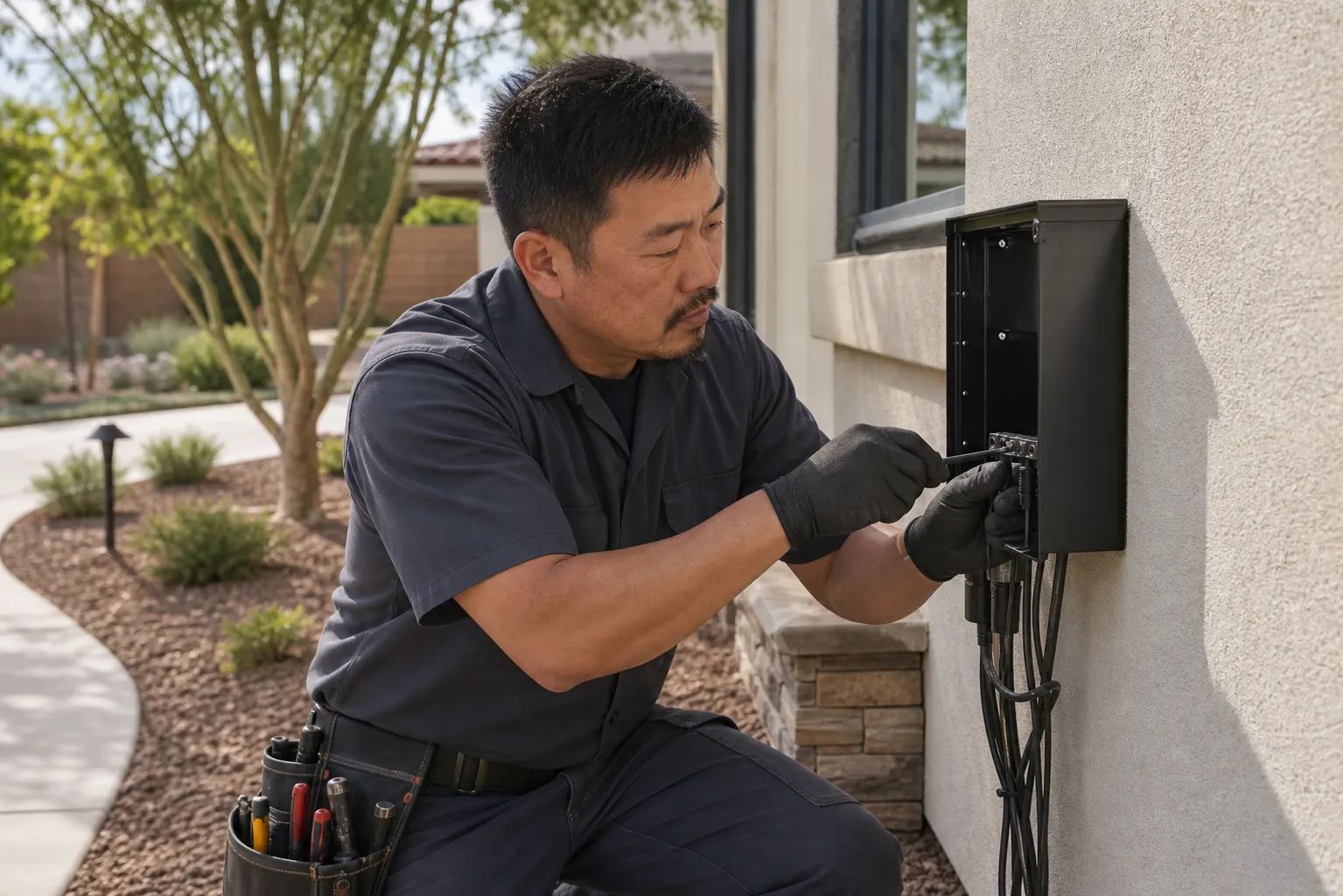
On install day
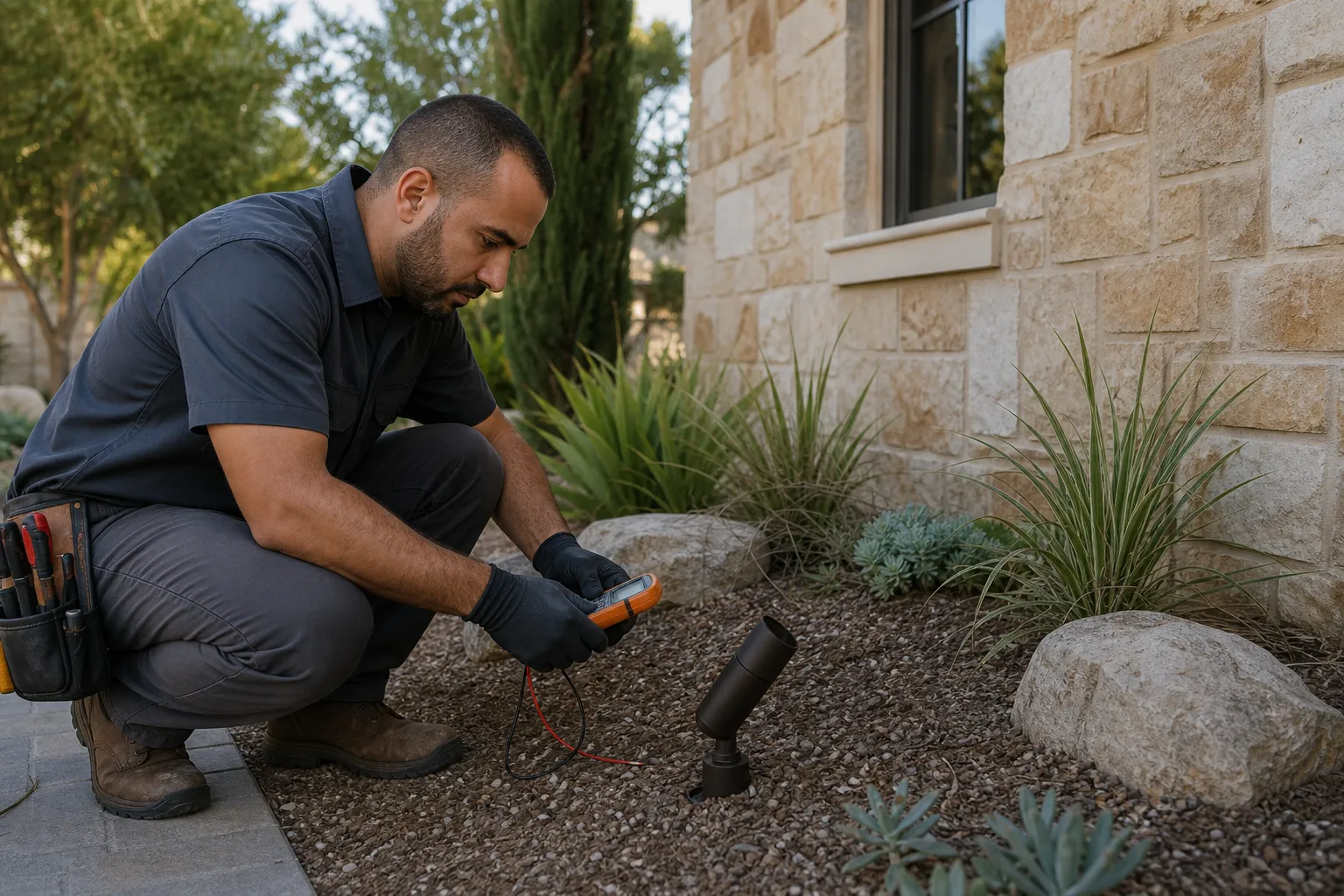
Wire runs get trenched below grade and routed clear of irrigation lines. The transformer is mounted near an existing exterior outlet, and each zone is landed on its own terminal so it can be isolated later.
Planting is worked around rather than through. Sod and decomposed granite are cut and replaced. At the end of the day the yard should look like nothing happened, apart from the fixtures.
In detail
We look at the home from the street, the walk to the door, the trees worth lighting, and the backyard as it gets used. Existing fixtures and wiring are checked at the same time.
Fixture type, optic, spacing, and mounting are chosen per area. Transformer capacity is sized to the total load with headroom to add later.
You get fixture counts by area, the control method, and the scope in writing before anything is ordered.
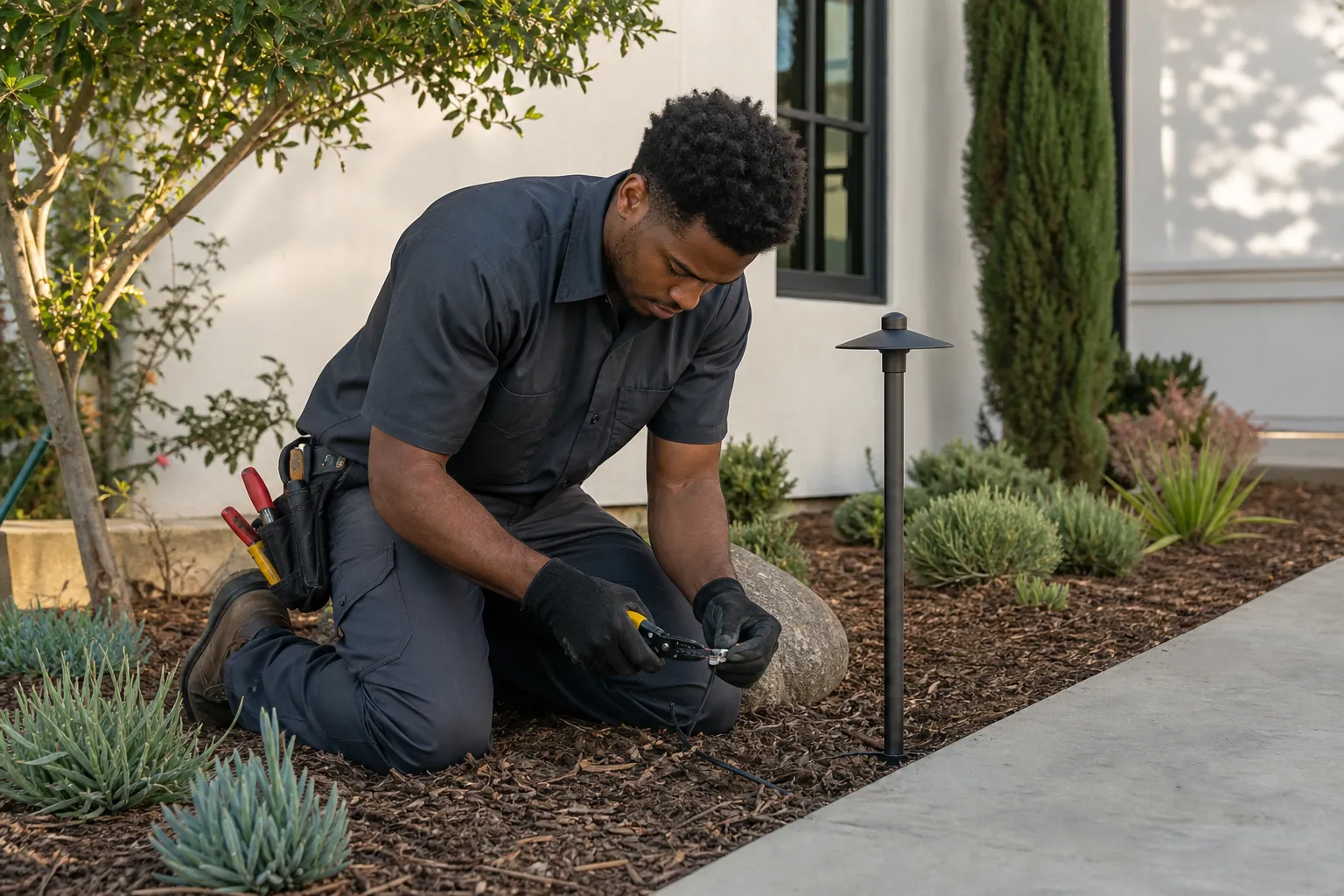
Low-voltage runs are buried, routed around irrigation, and sized to hold voltage at the far end of each run.
Fixtures are set plumb, at consistent heights, and hidden in planting where possible.
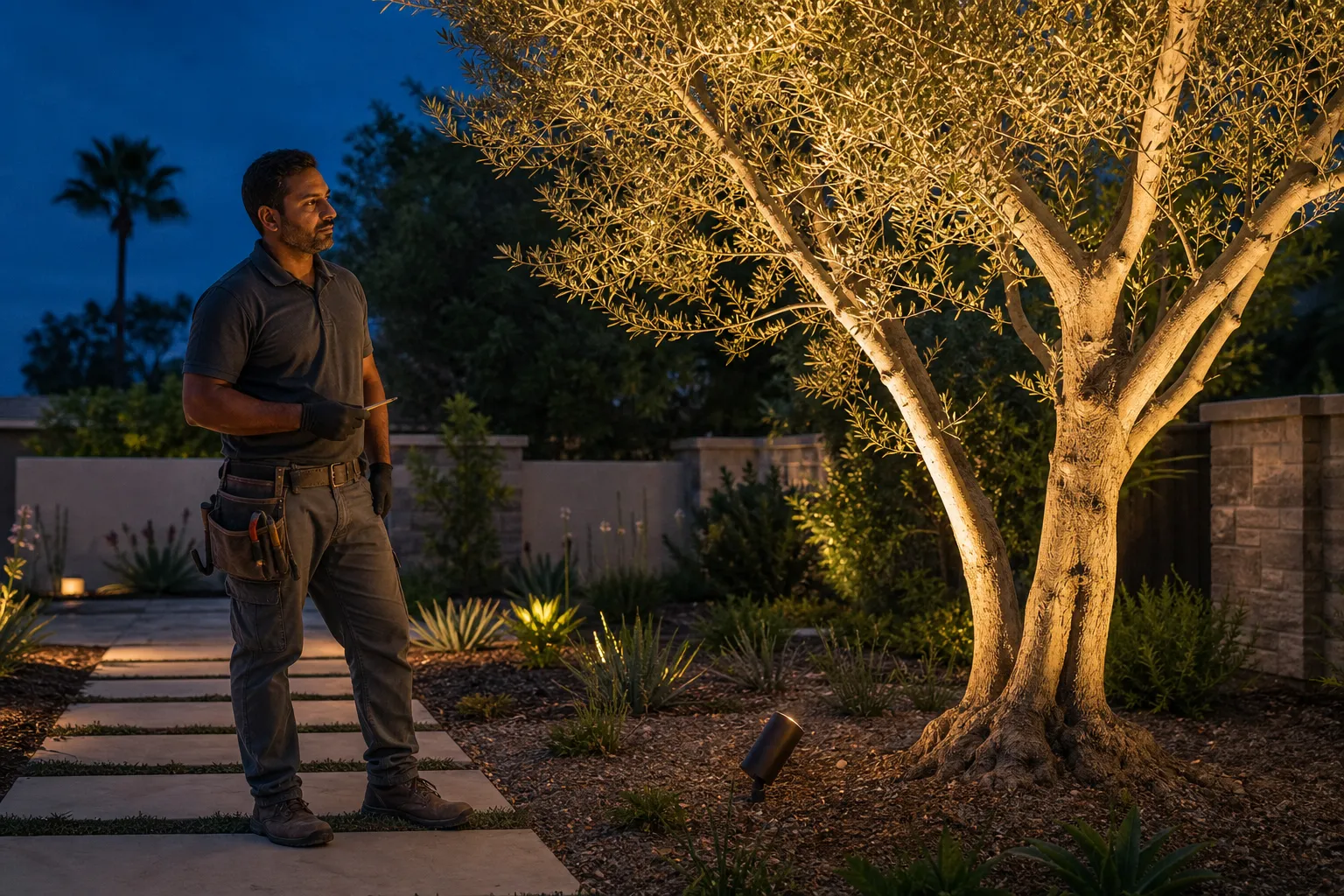
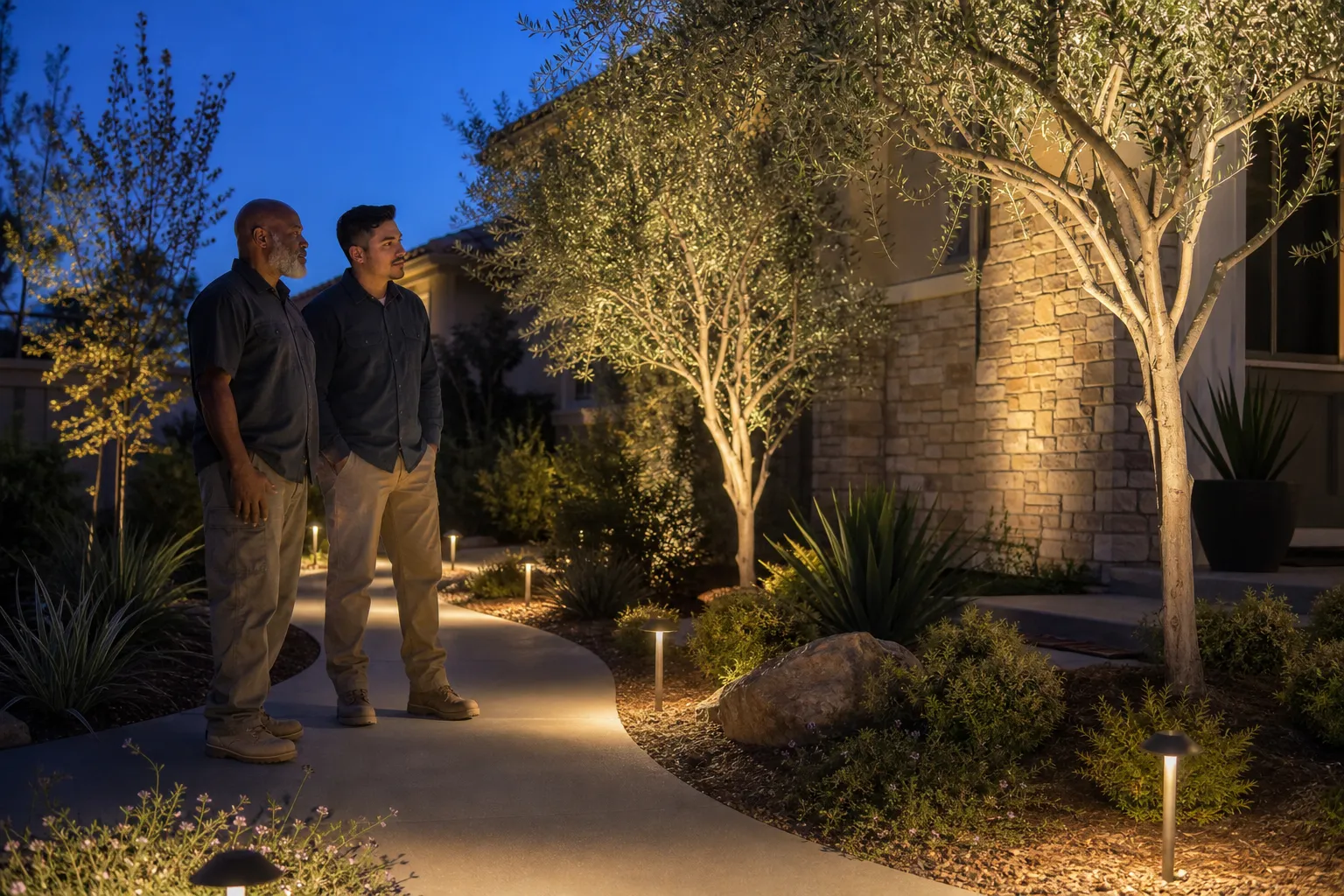
We come back after dark to aim, shield glare, set the timer, and walk the system with you.
Questions
These answers are on the page and reflected in the page’s structured data.
Most residential landscape lighting installs run one to three days depending on fixture count, trenching distance, and hardscape access. Larger properties are staged across more than one visit.
Low-voltage wire is buried in a narrow trench, usually a few inches deep. Sod and decomposed granite are cut and replaced, and runs are routed around irrigation lines and root zones.
Yes. Fixture positions are staked or marked and reviewed with you on the property before wire is pulled.
Yes. Aiming is done at night as part of every install. Daylight aiming is a guess; the final pass happens once the system is the only light on the property.