Walk the property
We review the home, planting, entries, dark spots, and the views that matter.
Landscape Lighting
Low-voltage lighting for the whole property, Bakersfield and Kern County.
The short version
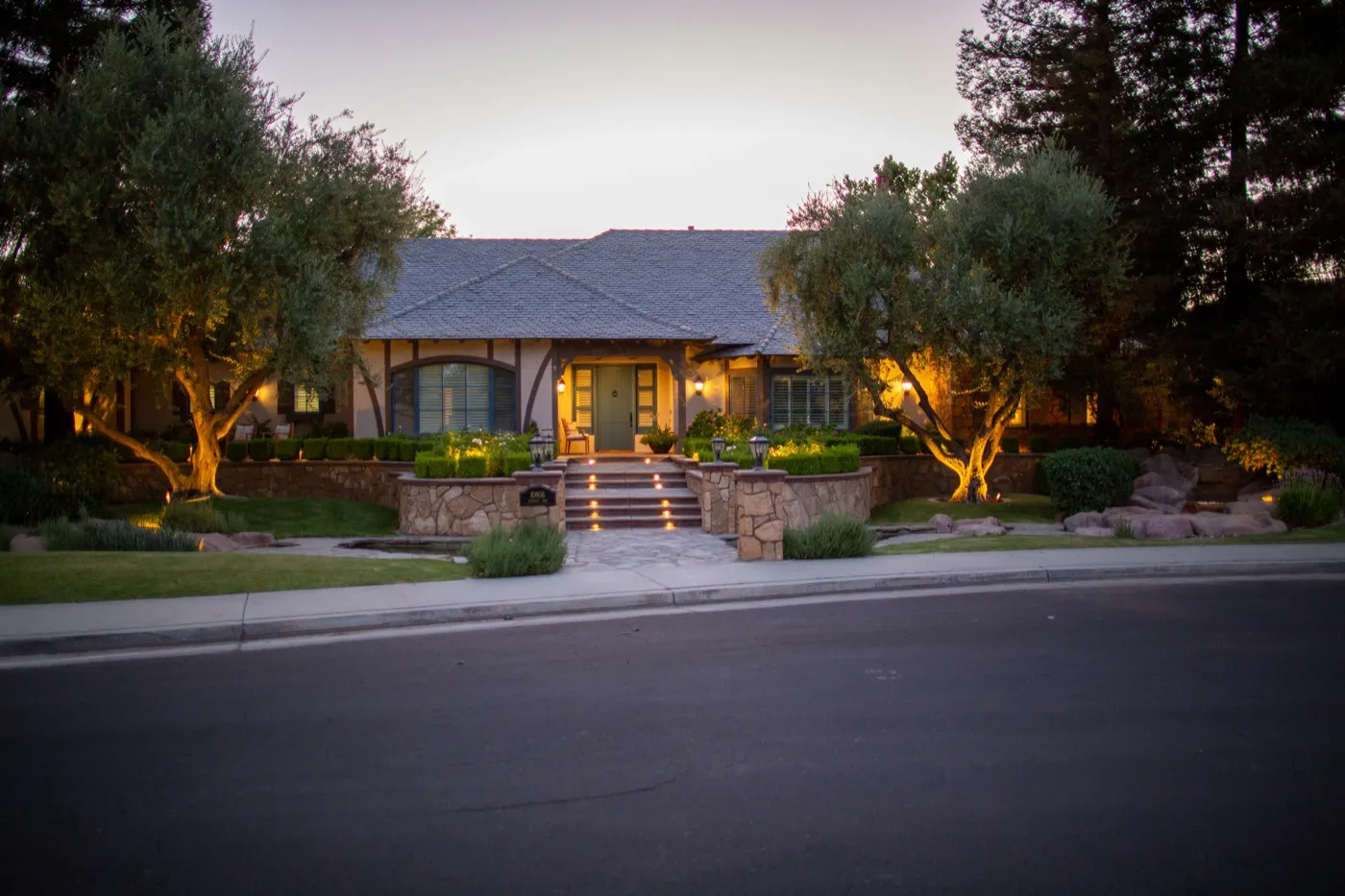
Landscape lighting should make a property feel intentional at night, not overlit. The right system adds depth, safer movement, and a better view from the street.
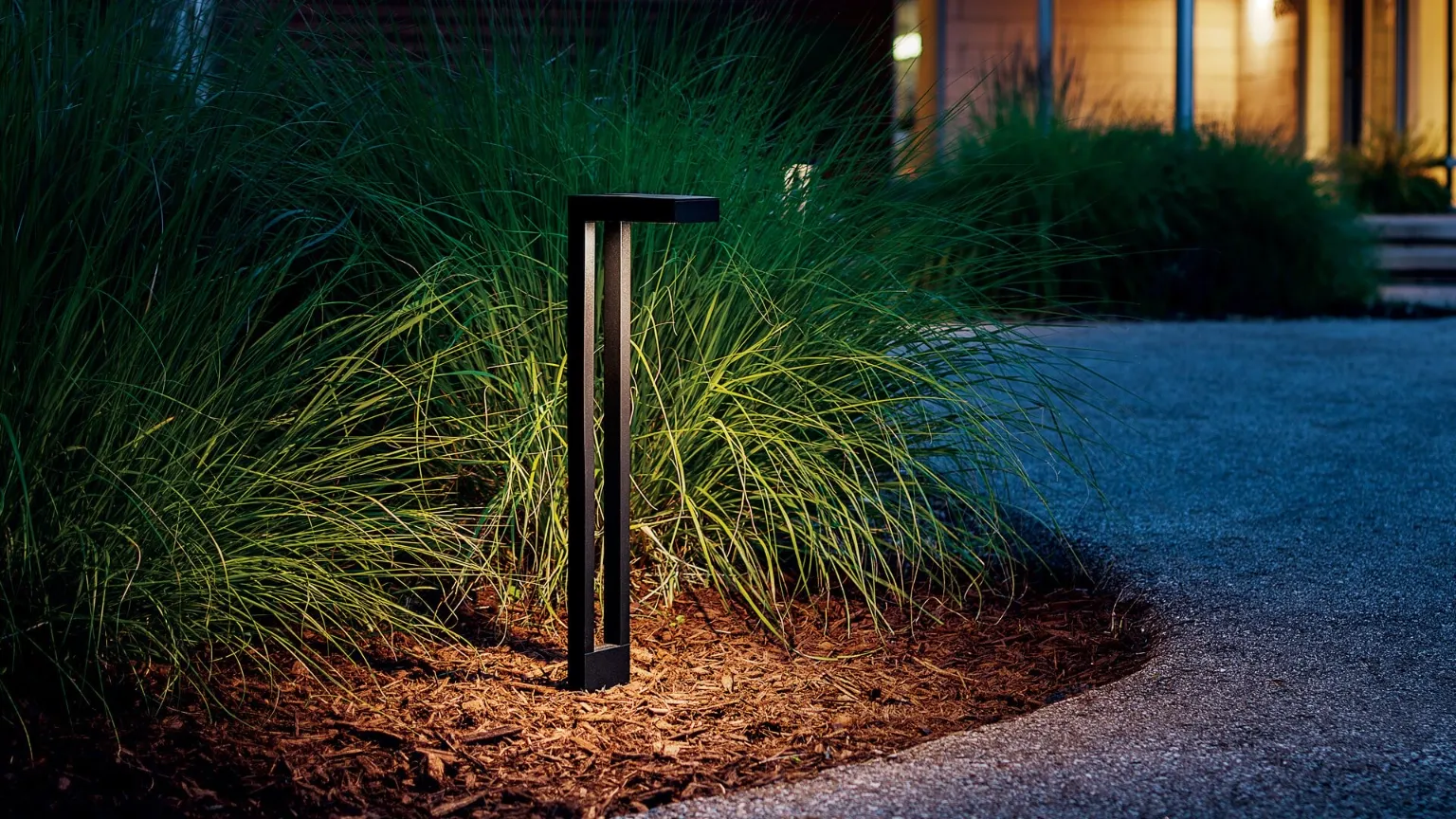
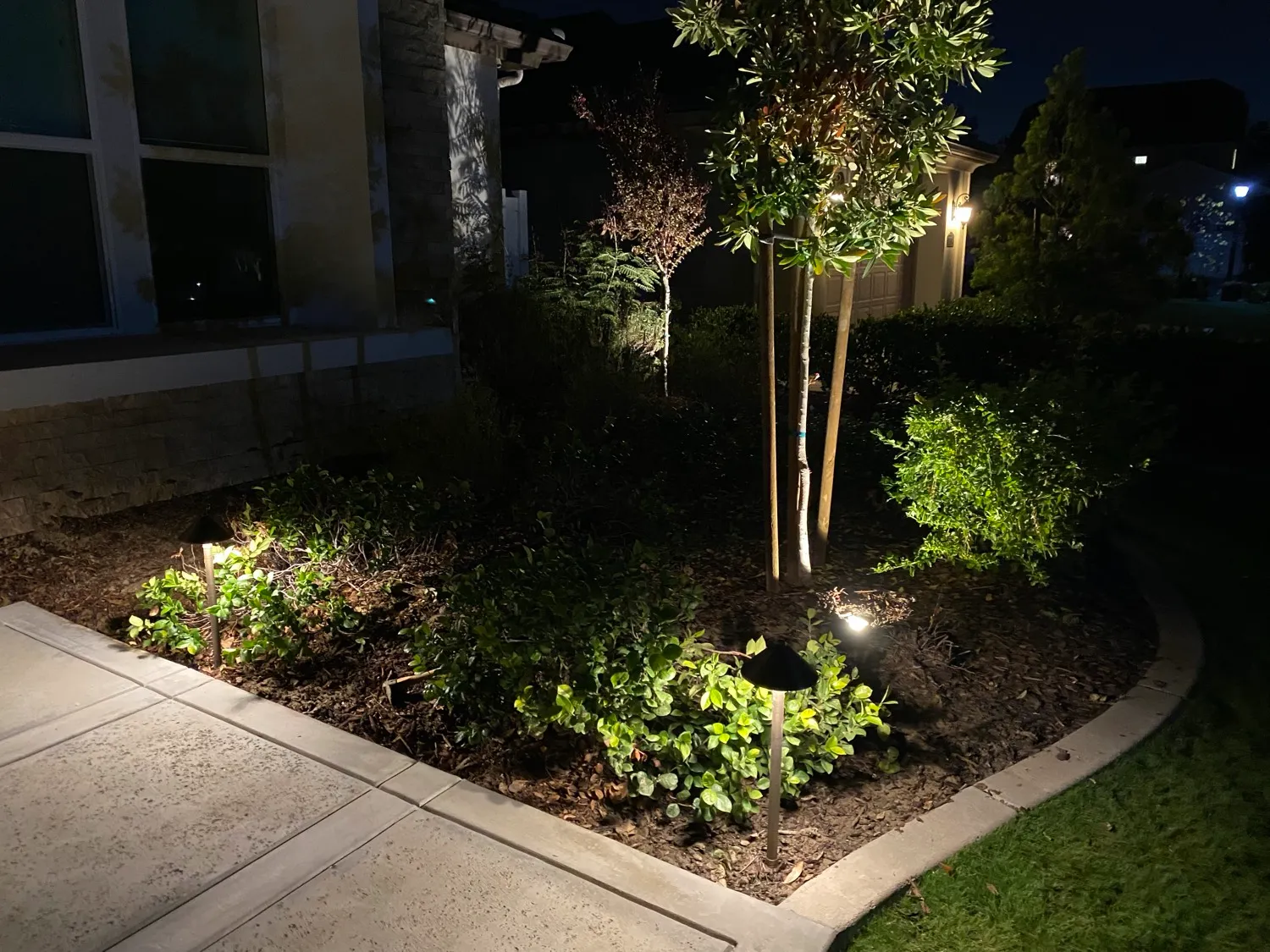
We plan fixture placement around the property itself: the architecture, trees, garden beds, entries, walkways, patios, and the way people actually move through the space.
Plans are built for local conditions — Bakersfield heat, dust, hardpan soil, heavy irrigation, and mature trees that keep growing into the beams.
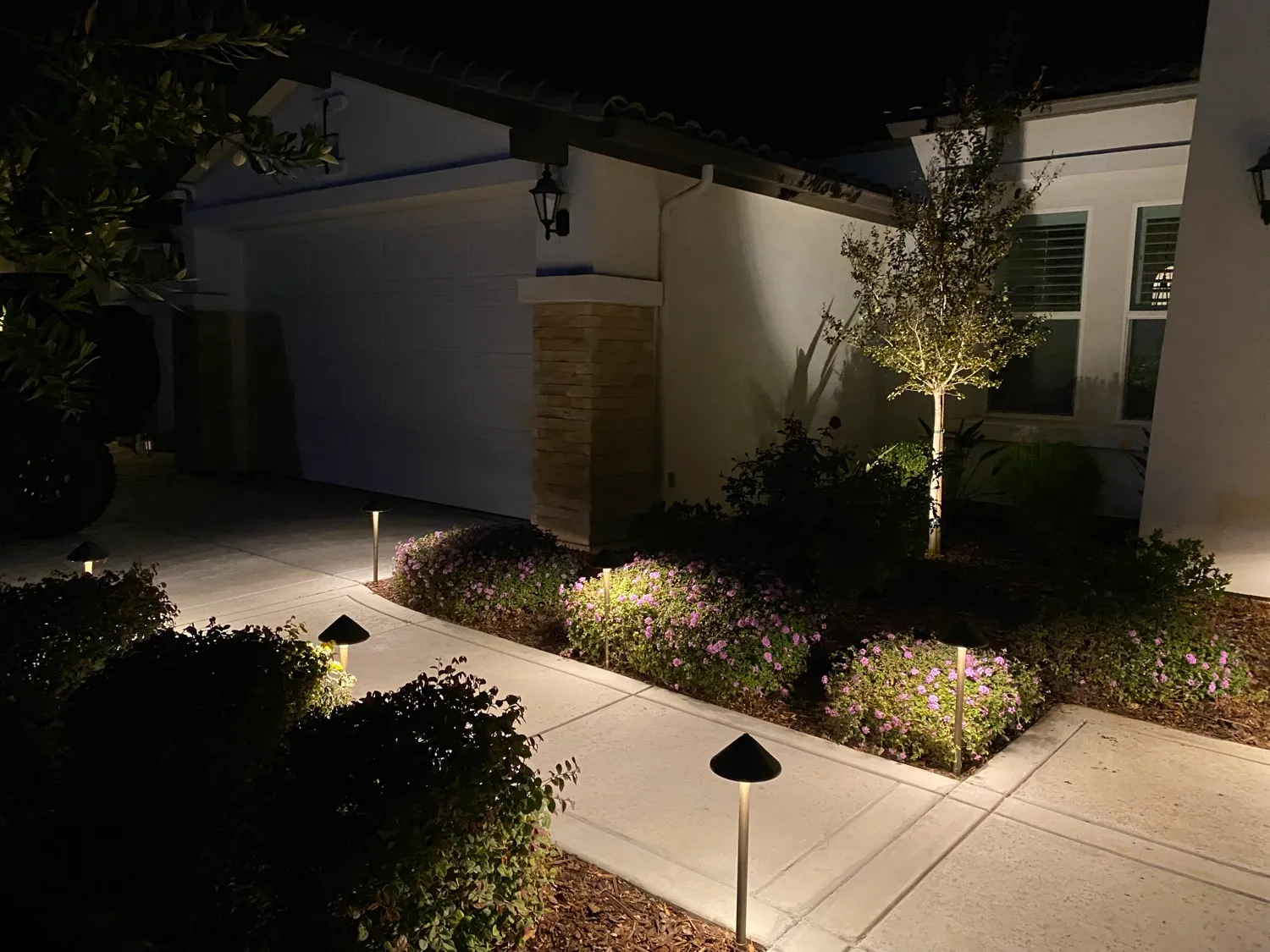
Design first
We balance path lighting, tree uplighting, architectural highlights, and outdoor living areas so the finished system feels calm, useful, and built into the home.
What we install
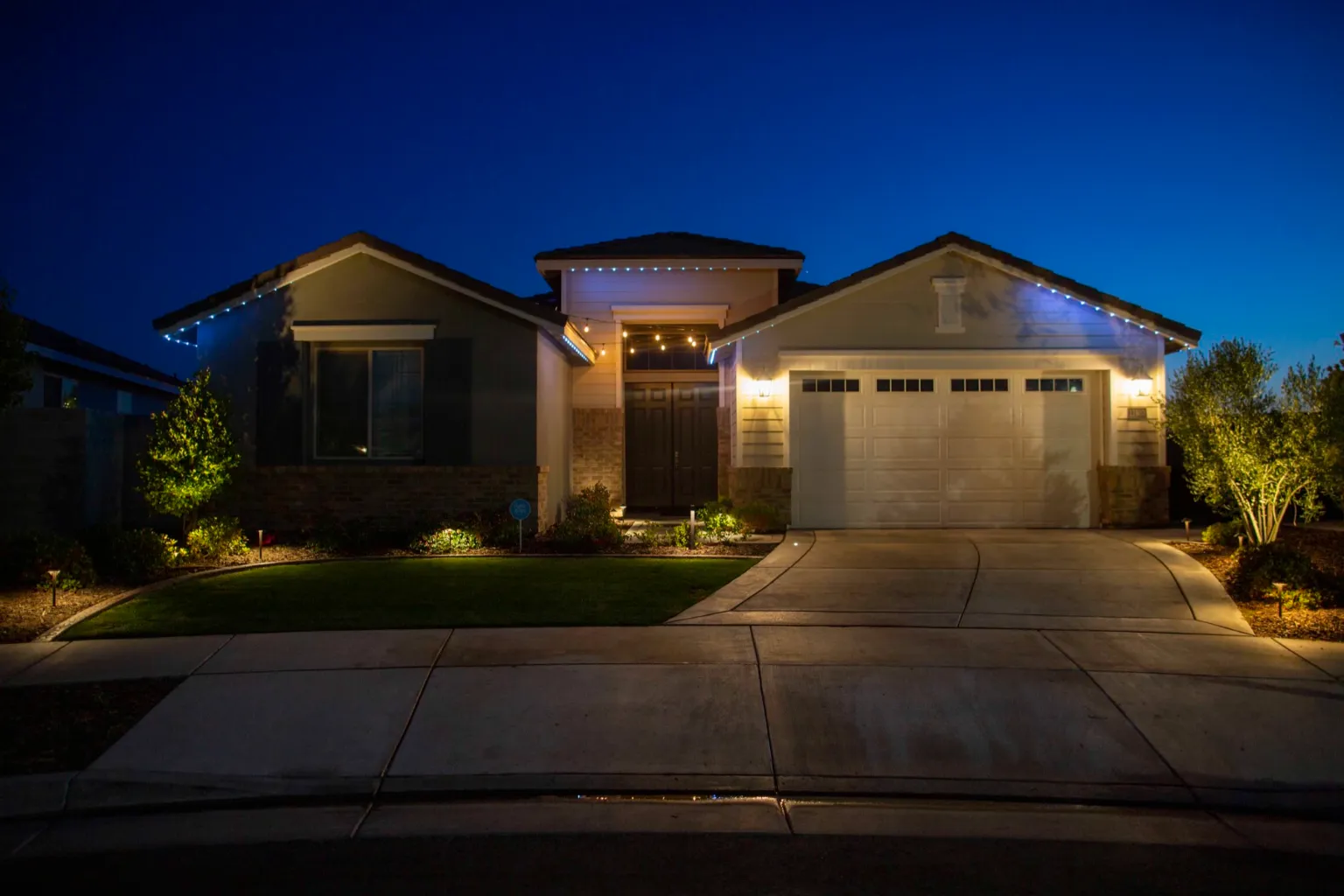
Architecture & stonework
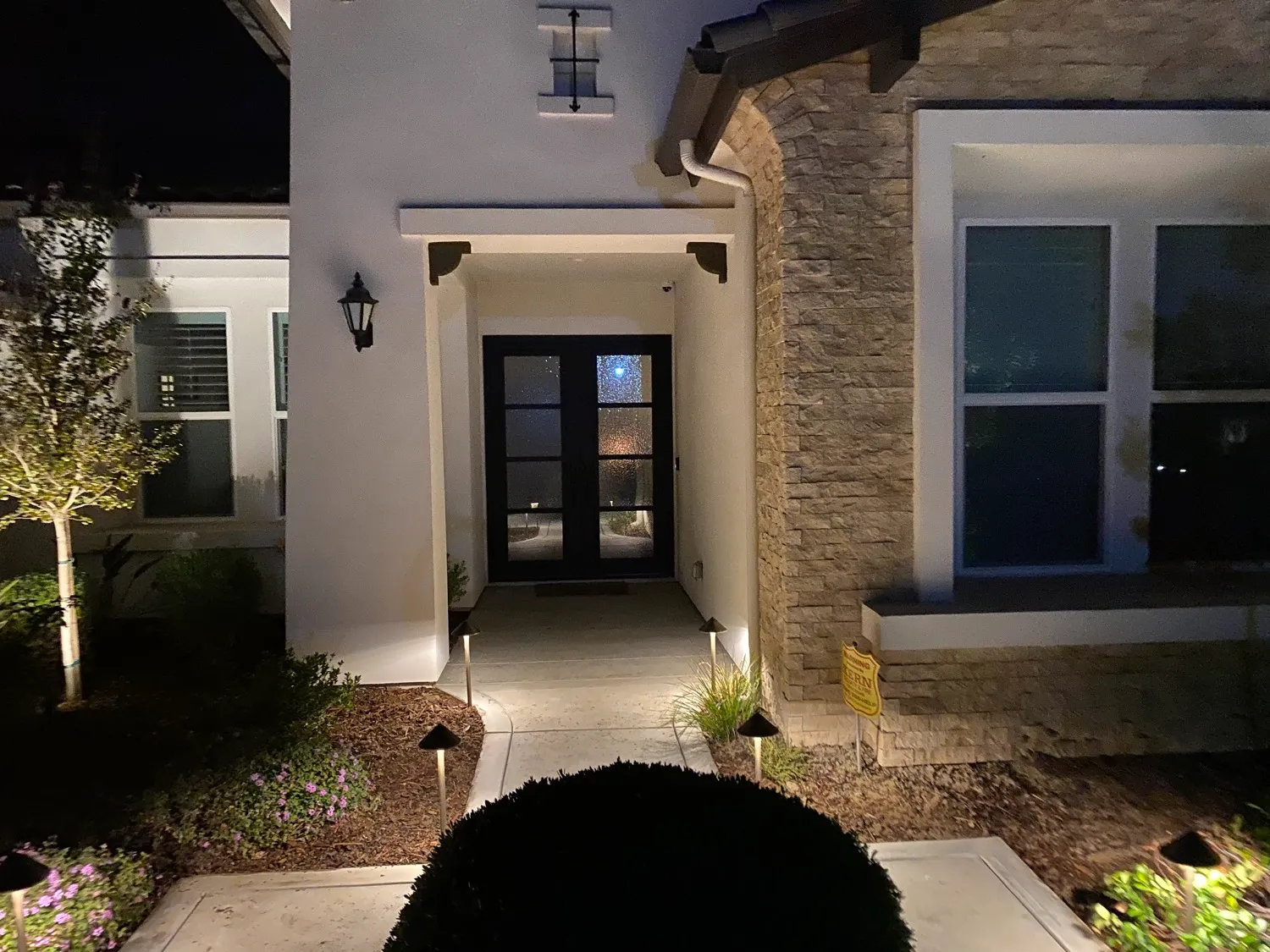
Columns, gables, stacked stone, and entry walls all take light differently. Grazing a textured surface from close range shows the material; flooding it from far away flattens it.
We keep the beams below the roofline, shield the source from view, and match the color temperature across the whole property so nothing looks patched together.
Safety and visibility
The steps down to the lawn, the grade change beside the driveway, the turn in the walk nobody sees while carrying groceries in. Those are the places light earns its keep before anyone starts talking about curb appeal.
A property with no dark gaps also reads differently from the sidewalk. That is a side benefit rather than a security system, and we will not sell it as one, but removing the blind spots darkness creates is worth doing on its own.
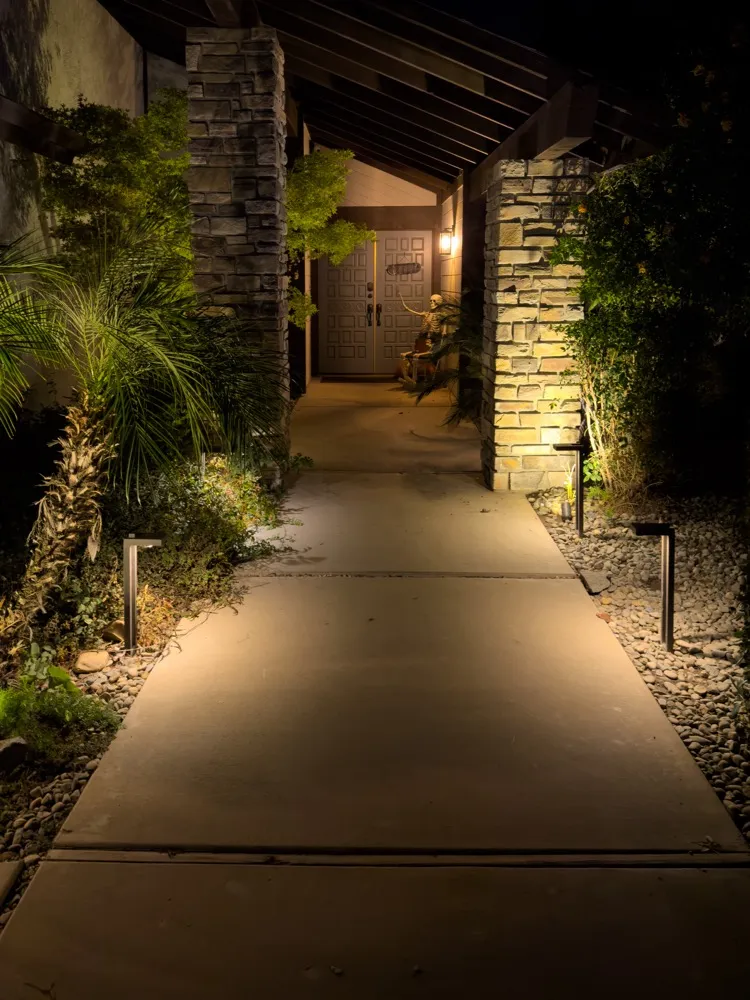
How the system is built
A low-voltage system runs on a transformer mounted near a exterior outlet, feeding buried wire runs out to each fixture. We size the transformer for the total load with headroom to add later, split the property into zones so areas can run independently, and keep voltage consistent from the first fixture to the last.
Timers, photocells, or app control decide when it comes on. Astronomical timers follow sunset through the year instead of drifting out of sync every season.
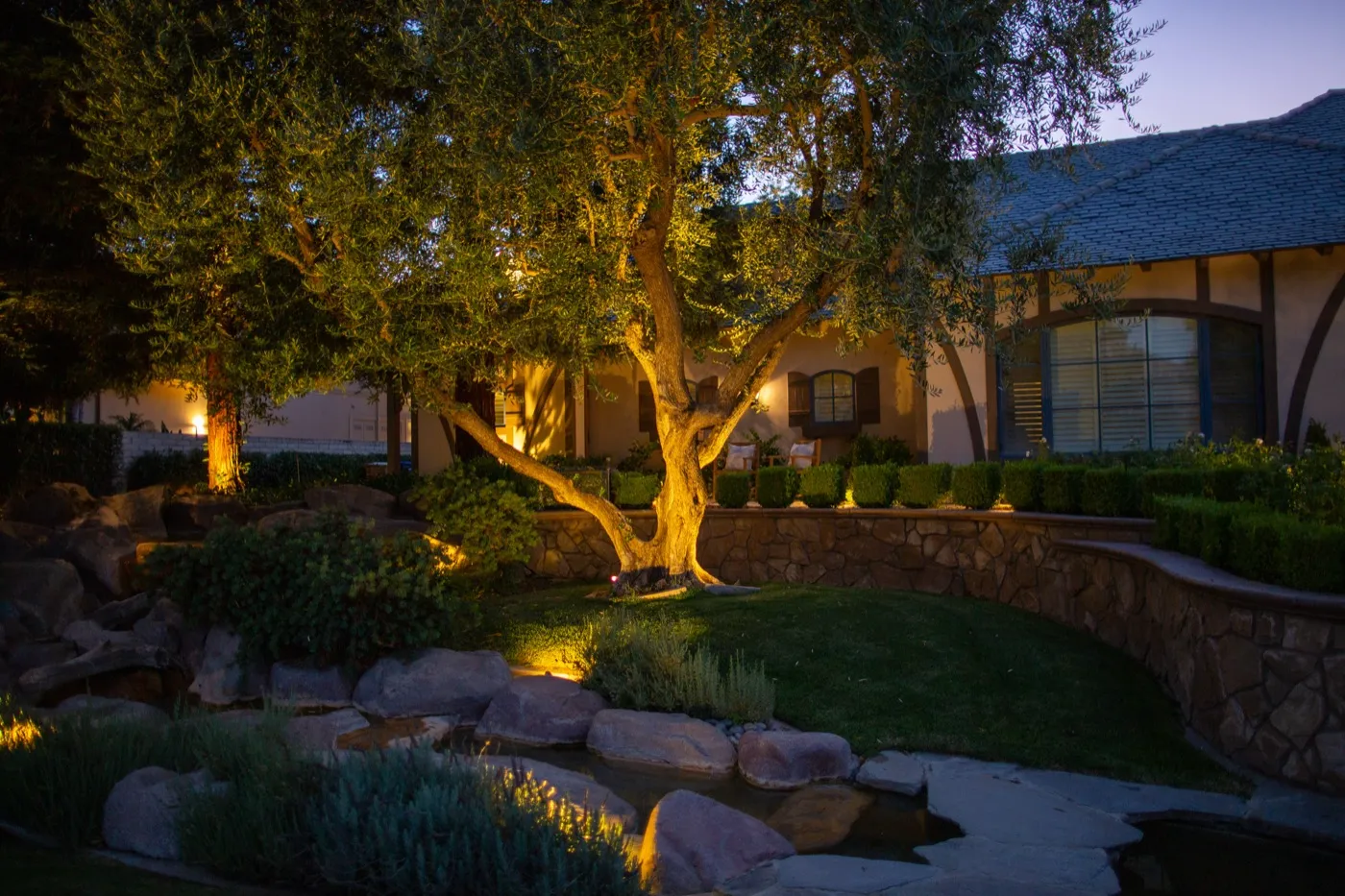
Our process
We review the home, planting, entries, dark spots, and the views that matter.
Fixture type, spacing, beam direction, wiring, transformers, and controls are planned before install.
Fixtures, wire paths, transformers, timers, and controls are installed with a finished look.
We aim and adjust the system after dark so the finished result feels balanced.
The goal is simple: make the home feel expensive without making the lights feel loud.
The standard